
Uncategorized
Artificial Green Walls in Modern Interiors: Colour, Marble and Décor Ideas
Oct
An artificial green wall is a modern way to add colour, texture and a natural touch to your home or workspace.
An Artificial Green Wall as a Focal Point
For years, many modern interiors have favoured an almost monochrome look: white, grey, beige and just a touch of contrast. This style still appeals to those who prefer a calm, uncluttered feel. Alongside it, however, another direction is emerging, bringing more character through rich colours, varied textures and combinations inspired by nature.
Burgundy, deep greens, natural neutrals and warm browns all feature in contemporary interior palettes. In this setting, an artificial green wall can be more than a standalone feature — it can also become part of the overall colour scheme.
A Green Wall as a Focal Point in Your Colour Scheme
A green wall draws the eye with its variety of leaves, shapes and shades. It can add depth to a simple room or complement colours and materials already chosen for the interior.
An artificial plant wall panel can work well in a living room, office, restaurant, hotel or retail space. At home, a green wall can define a cosy corner or create a backdrop behind the sofa. In a business setting, it can highlight a reception desk or seating area, or draw attention to a wall customers see as soon as they walk in.
Burgundy, Green and Warm Neutrals
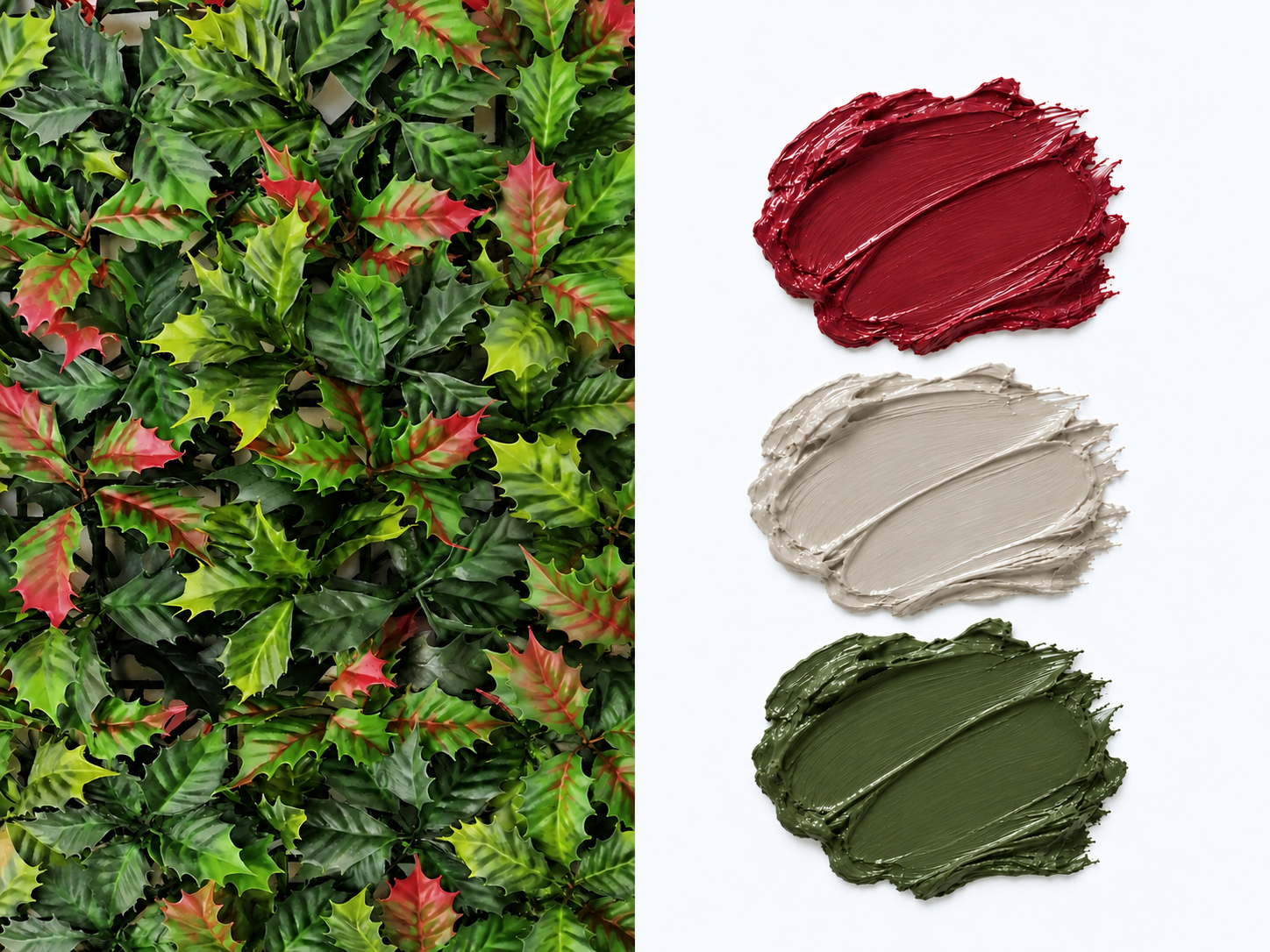
Burgundy adds depth and elegance. Cream, sand and warm beige soften this rich colour, while a green wall brings in a natural contrast. You can create this palette with a burgundy armchair or soft furnishings, light-coloured walls and green panels as the main feature.
For a softer look, pair burgundy with olive or dark green and natural wood tones. The result is a cosy interior with a distinct character, without relying on lots of bright colours.
Blue-Green Shades and Burgundy
Turquoise and blue-green shades offer another way to bring more colour into an interior. Paired with burgundy and wood, they create a dramatic yet cosy feel. A green wall adds natural texture and can tie the colours together in a cohesive scheme.
This combination works well for a feature wall in a living room, reception area or restaurant. For a balanced look, use blue-green shades and burgundy in the furniture or soft furnishings, while green panels add depth.
Artificial Marble and Artificial Greenery
Marble-effect surfaces add pattern and elegance. Paired with artificial plants, they create a contrast between the stone’s smooth veining and the rich texture of the leaves.
For example, a light decorative panel with delicate grey veining can highlight a deep green wall. A darker marble effect can create a more dramatic backdrop for green panels. To keep the two features from competing, let one have a more subtle pattern and the other carry most of the visual weight.
Green marble surfaces can also be an interesting choice for those who want a bolder interior. They echo the natural tones of a green wall while adding a different texture and material feel.
Décor That Brings the Look Together
An artificial plant wall feature can be paired with textiles, furniture and decorative accessories in your chosen colour palette. The colours should complement one another rather than compete for attention. Sometimes a few carefully chosen accents — burgundy cushions, an olive armchair or a blue-green accessory — are all it takes to make a room feel more personal and complete.
This means an artificial green wall can work just as well in a calm, monochromatic interior as in a bolder colour scheme. It adds greenery, texture and character to a wall, whether at home or in a commercial space.
Artificial greenery — selected with love, just for you.


